Human Rights
HDI works towards equipping duty bearers and rights-holders (including individuals and communities), and particularly marginalized groups, with knowledge and skills to advocate for their human rights. We also build the capacity of duty bearers to respect, protect and fulfill their obligations in accordance with the Constitution of Rwanda, as well as regional and international human rights instruments ratified by Rwanda.
Policy & Legal Advocacy
Our work on human rights includes the right to health, but also facilitating access to justice through legal aid and legal advice to our rights holders. At the heart of this work, our advocacy strategy is two-fold – Policy and Legal.
We continue to strengthen our advocacy towards the realization of friendly policy and laws in regards to the rights of women, young people, people with disabilities, key populations, LGBTI persons, and other marginalized groups. HDI recognizes that discrimination, stigma, and restrictive policies are key drivers of continued poor health outcomes.
Right to Health for Sexual & Gender Minorities
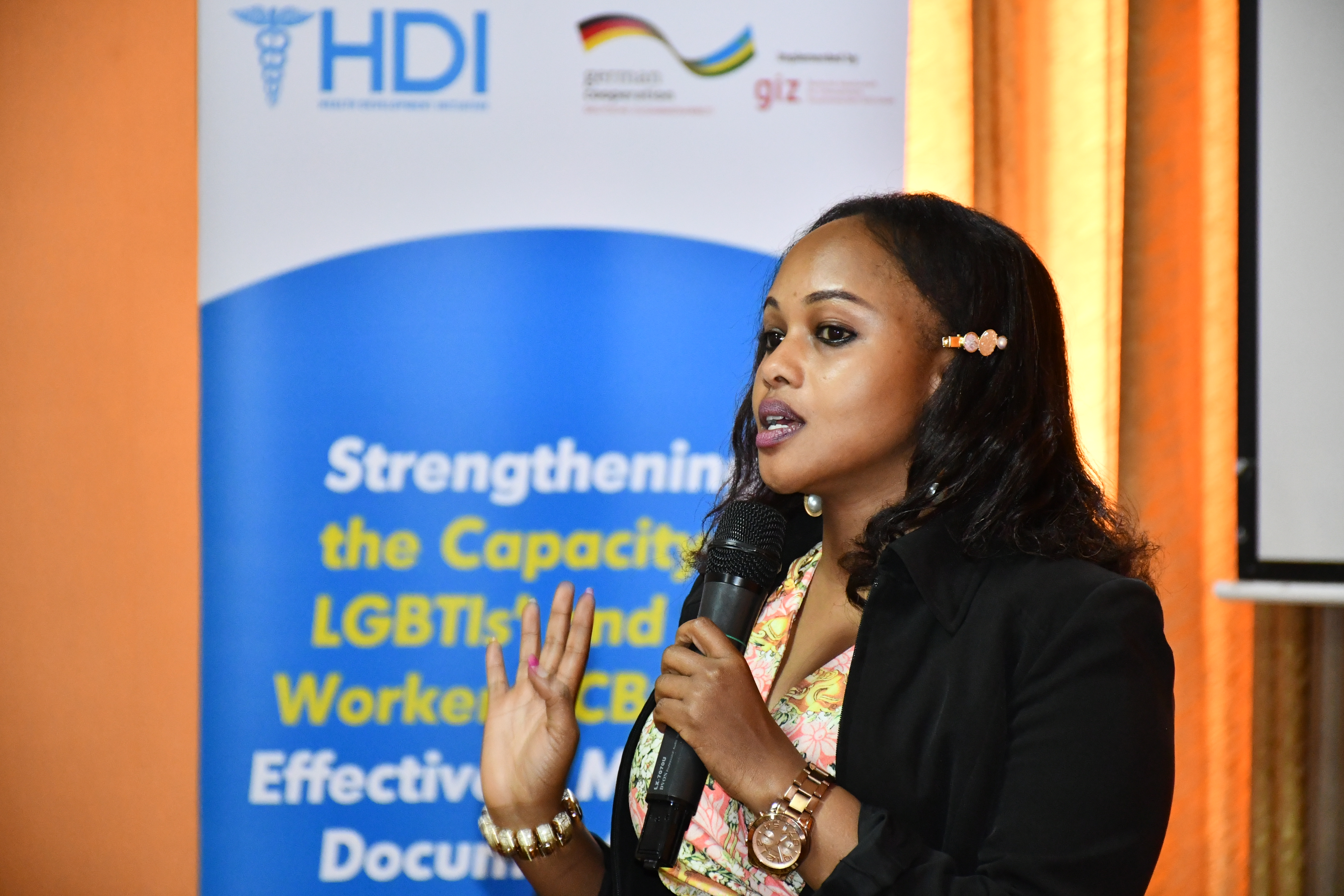
As a direct result of HDI’s advocacy, the Government of Rwanda decriminalized sex work and same-sex relationships. This was a huge step forward in the fight to reduce stigma and discrimination, which would otherwise hinder access to healthcare and treatment.
Now, the challenge has become empowering members of the LGBTI community and female sex workers to understand their rights and sensitizing healthcare professionals and law enforcement officers (among others) to uphold their rights.
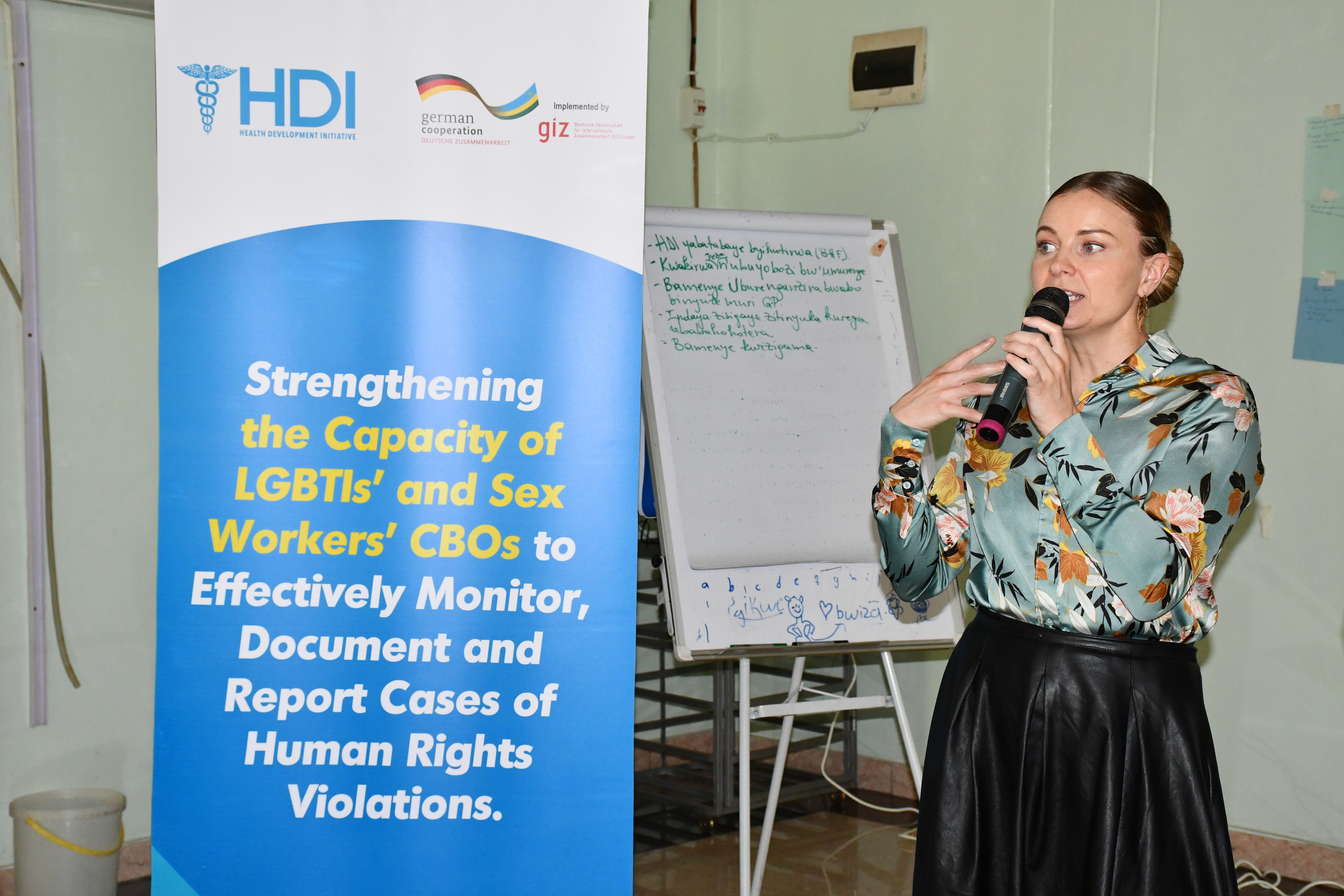
In order to bridge the divide between the adoption of laws and policies regarding the SRHR of key populations and the awareness of these laws, HDI has trained members of LGBTQIA+ and sex worker organizations, who have started to demand their rights and advocate for their peers. In 2020, LGBTQIA+ and sex worker organizations jointly signed a shadow report that was submitted to UN human rights council.

Right to Health for Key Populations
HDI defines key populations, or those members of society who are most susceptible to HIV/AIDS, as men who have sex with men (MSM), sex workers (male and female), people who inject drugs and transgender individuals.
As an organization, HDI strives to contribute to a better understanding of substance use, alcohol use, HIV prevention and depression among injecting drug users on behalf of society. Legally, HDI advocates for a shift towards harm reduction methods, as opposed to criminalizing measures, to combat drug use. The goal is to provide appropriate social and medical support for drug users’ healing and social reintegration journeys.
HDI legal professionals provide aid to sex workers, MSM, and transgender individuals who have been illegally detained, and may pay for their legal and medical services.
Patient Rights
HDI delivers facility-based empowerment training of health professionals and support staff from both private and public health facilities. HDI builds capacity on laws and policies in regards to delivering stigma-free, non-discriminatory health services.
Risk-reduction of medical negligence
Increased healthcare systems resiliency and equity
Improvement of doctor-patient communication and trust